Ammunition Storage Laws in Canada: Complete Provincial Guide
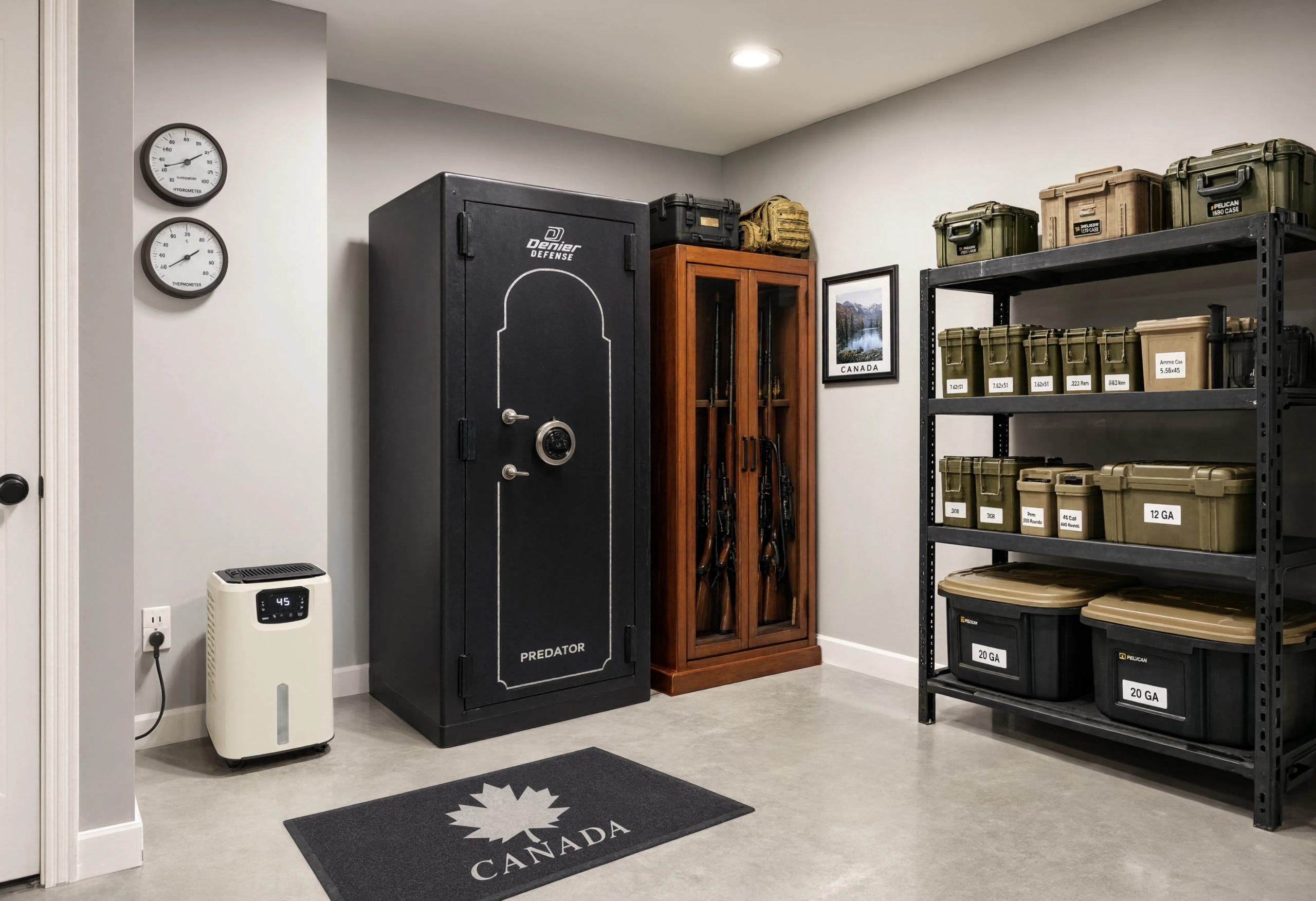
Proper ammunition storage is both a legal requirement and a safety imperative for Canadian gun owners. While federal regulations provide the framework, understanding provincial variations and best practices ensures you remain compliant while protecting your investment and keeping your household safe.
Quick Answer: Canadian Ammunition Storage Requirements
Federal Law Requires:
- Store ammunition in a manner that is reasonably safe and secure
- Prevent unauthorized access (especially by minors)
- Take reasonable precautions against theft
What’s NOT Required by Law:
- Storing ammunition separately from firearms
- Specific locking mechanisms for ammunition
- Ammunition safes or containers
- Registration of ammunition quantities
Best Practice: Store ammunition in locked containers, separate from firearms, in a cool, dry location.
Federal Ammunition Storage Requirements in Canada
The Firearms Act: What It Actually Says
The Firearms Act and its regulations are surprisingly brief regarding ammunition storage. Unlike the detailed requirements for firearms, ammunition storage is governed by general principles of “safe and secure” storage.
Section 6 of the Storage, Display, Transportation and Handling of Firearms Regulations addresses ammunition indirectly by requiring that individuals:
- Store safely and securely: Use reasonable measures to prevent unauthorized access
- Prevent theft: Take precautions that a reasonable person would consider adequate
- Protect minors: Ensure children and unauthorized persons cannot access ammunition
What This Means in Practice:
The law doesn’t specify:
- What type of container to use
- Whether locks are required
- If separation from firearms is mandatory
- Maximum quantities allowed
- Inspection or reporting requirements
Important Legal Note: While separation of ammunition from firearms is widely recommended and considered best practice, it is not explicitly required by federal law. However, storing them together may complicate legal defense if theft or unauthorized access occurs.
RCMP Storage Recommendations
The RCMP Canadian Firearms Program provides guidance (not law) on ammunition storage:
Recommended Practices:
- Store in original packaging or clearly labeled containers
- Keep in locked cabinet, room, or container
- Separate from firearms when possible
- Control humidity and temperature
- Maintain inventory for insurance purposes
- Inspect regularly for deterioration
These are recommendations, not legal requirements, but following them demonstrates “reasonable precautions.”
Ontario Ammunition Storage Regulations
Provincial Framework
Ontario follows federal regulations exclusively—there are no additional provincial laws specifically governing ammunition storage.
Key Points:
- Federal Firearms Act applies
- No Ontario-specific ammunition storage requirements
- Some municipalities have bylaws about firearm discharge, but not storage
- Provincial offences courts enforce federal regulations
Best Practices for Ontario Residents:
Urban Storage (Toronto, Ottawa, Hamilton, London):
- Store in locked containers to prevent theft in higher-density areas
- Consider apartment/condo rules (may restrict quantities)
- Use climate control for basement storage (humidity concerns)
- Notify insurance company of quantities stored
Rural Storage:
- Greater flexibility with storage locations
- Consider fire safety (separate from main residence if quantities are large)
- Protection from wildlife (bears, rodents)
- Seasonal temperature considerations
Climate Considerations:
- Hot, humid summers: Use desiccants, air conditioning
- Cold winters: Avoid unheated garages or sheds
- Spring flooding: Elevate storage above ground level
Common Ontario Storage Setups
Apartment/Condo:
- Small lockable cabinet or safe
- Under-bed storage containers with locks
- Closet shelving with locking doors
- Typical quantity: 500-1,000 rounds
Suburban Home:
- Basement gun room with locked door
- Steel cabinet or wooden cabinet with lock
- Separate ammunition safe
- Typical quantity: 1,000-5,000 rounds
Rural Property:
- Dedicated outbuilding (climate controlled)
- Large gun safe with ammunition storage
- Locked room in basement or garage
- Typical quantity: 5,000-20,000 rounds
Alberta Ammunition Storage Rules
Provincial Approach
Alberta has no provincial legislation beyond federal requirements. The province has a strong firearms culture and generally follows federal minimums.
Key Points:
- Federal Firearms Act only
- No additional provincial storage requirements
- No quantity limits
- No inspection regime
Alberta-Specific Considerations:
Climate Factors:
- Extreme temperature swings (-40°C to +35°C)
- Very dry conditions (use of desiccants less critical)
- Avoid storage in unheated outbuildings in winter
- Summer heat in attics can degrade ammunition
Rural vs Urban:
Calgary/Edmonton:
- Similar to other Canadian cities
- Locked storage recommended due to property crime rates
- Apartment/condo restrictions may apply
Rural Alberta:
- Most common: Large quantities stored in shops or outbuildings
- Climate-controlled spaces preferred
- Fire safety paramount (especially with reloading components)
- Wildlife protection (rodents attracted to smokeless powder)
Recommended Storage Solutions:
- Stack-On security cabinets ($200-500)
- Military surplus ammo cans ($15-30 each)
- Gun safes with ammunition compartments
- Basement rooms with locking doors
British Columbia Ammo Storage Laws
Provincial Regulations
BC follows federal regulations without additional provincial requirements. However, some municipalities have bylaws worth noting.
Key Points:
- Federal Firearms Act applies
- No provincial ammunition storage law
- Some municipal bylaws about quantities (rare)
- Fire codes may apply to large quantities
BC Climate Considerations:
Coastal Regions (Vancouver, Victoria):
- High humidity year-round (50-80%)
- Corrosion risk for brass and components
- Moisture control essential
- Nickel-plated ammunition recommended
- Use desiccants religiously
Interior BC (Kelowna, Kamloops):
- Dryer conditions similar to Alberta
- Temperature extremes less severe
- Standard storage adequate
Northern BC (Prince George, Fort St. John):
- Cold winters require indoor storage
- Humidity moderate
- Consider propane or electric heat for outbuildings
Storage Recommendations for BC:
High-Humidity Areas:
- Use ammunition cans with rubber seals
- Place silica gel desiccants in containers
- Inspect quarterly for corrosion
- Rotate stock regularly
- Consider dehumidifier in storage room
Seismic Considerations:
- Secure heavy safes and cabinets to walls/floor
- Use shelving with lips to prevent ammunition falling during earthquakes
- Avoid top-heavy storage arrangements
Quebec Ammunition Storage Requirements
Provincial Framework
Quebec has historically had additional firearms regulations, though most were harmonized with federal law. Currently, Ammo Shortage laws canada storage follows federal requirements.
Key Points:
- Federal Firearms Act applies
- No separate provincial ammunition storage law
- Historical C-17 registration requirements no longer exist
- Sûreté du Québec enforces federal regulations
Quebec-Specific Considerations:
Language Requirements:
- Safety information should be available in French
- Retailers must provide French documentation
- No requirement for French-language labels on storage
Cultural Factors:
- Strong hunting tradition in rural Quebec
- Urban areas (Montreal, Quebec City) more restrictive culturally
- Anglophones and Francophones have different firearms traditions
Climate Considerations:
- Cold, snowy winters
- Hot, humid summers
- Indoor storage essential
- Dehumidification important in summer
Storage Recommendations for Quebec:
Urban (Montreal, Quebec City, Laval):
- Locked cabinets or safes required practically due to property crime
- Apartment storage challenging
- Quantities typically limited to 500-1,000 rounds
- Insurance notification recommended
Rural Quebec:
- Similar to other Canadian rural areas
- Larger quantities common for hunting
- Outbuilding storage acceptable if climate controlled
- Community standards important
Prairie Provinces: Manitoba & Saskatchewan
Provincial Regulations
Both provinces follow federal regulations exclusively, with strong firearms cultures and practical approaches to storage.
Key Points:
- Federal Firearms Act only
- No provincial ammunition storage requirements
- Large-scale storage common (farming/ranching communities)
- Practical approach to enforcement
Manitoba-Specific Considerations:
Climate:
- Extreme cold winters (-40°C common)
- Hot summers (+35°C possible)
- Moderate humidity
- Indoor storage essential in winter
Winnipeg vs Rural:
- Urban: Standard locked storage
- Rural: Outbuilding storage common
- Indigenous communities: Traditional uses respected
Storage Recommendations:
- Heated garages or basements preferred
- Military ammo cans excellent for bulk storage
- Avoid unheated sheds in winter
- Summer storage less problematic than coastal areas
Saskatchewan-Specific Considerations:
Climate:
- Very cold winters
- Dry conditions year-round
- Hot summers
- Less humidity concern than eastern Canada
Urban (Regina, Saskatoon) vs Rural:
- Urban: Similar to other prairie cities
- Rural: Large quantities stored commonly
- Farming operations often store significant amounts
- Gopher/pest control means high .22 LR consumption
Storage Solutions:
- Shop or garage storage common
- Large safes or cabinets
- Basement rooms with locking doors
- Fire safety important (grain dust, fuel nearby)
Atlantic Provinces: New Brunswick, Nova Scotia, PEI, Newfoundland
Regional Approach
All Atlantic provinces follow federal regulations without additional provincial requirements. Maritime culture includes strong hunting traditions.
Key Points:
- Federal Firearms Act applies
- No provincial ammunition storage laws
- High humidity in all provinces
- Hunting tradition means significant ammunition storage
Climate Considerations Across Atlantic Canada:
Humidity:
- Year-round moisture concerns
- Coastal areas especially problematic
- Fog and salt air accelerate corrosion
- Dehumidification essential
Temperature:
- Moderate winters (compared to prairies)
- Cool summers
- Indoor storage recommended
- Basements often damp
Storage Recommendations for Atlantic Provinces:
Coastal Areas:
- Use military ammo cans with seals
- Multiple desiccant packets per container
- Inspect every 3-4 months
- Nickel-plated or polymer-coated ammunition preferred
- Avoid dirt floor basements for storage
Rural vs Urban:
- Rural: Larger quantities, hunting focused
- Urban (Halifax, St. John’s, Moncton): Smaller quantities
- Island locations (PEI, Newfoundland): Special humidity concerns
Province-Specific Notes:
New Brunswick:
- Strong Acadian hunting culture
- Both French and English-speaking communities
- Moderate climate
- Standard storage practices effective
Nova Scotia:
- Coastal humidity highest in Atlantic Canada
- Salt air corrosion significant
- Inland areas better for storage
- Consider climate-controlled spaces
Prince Edward Island:
- Small firearms community
- High humidity
- Limited local retail (order online)
- Store indoors exclusively
Newfoundland and Labrador:
- Extreme variation: coastal vs interior
- Labrador has extreme cold
- Newfoundland has high humidity
- Hunting tradition very strong
- Large quantities common (caribou, moose hunting)
Northern Territories: Yukon, Northwest Territories, Nunavut
Unique Considerations
Northern territories follow federal regulations but face unique challenges due to extreme climate, remote locations, and subsistence hunting needs.
Key Points:
- Federal Firearms Act applies
- No territorial ammunition storage laws
- Firearms essential for safety and subsistence
- Large quantities stored due to shipping costs and availability
Climate Challenges:
Extreme Cold:
- Winters: -40°C to -50°C common
- Permafrost affects foundation storage
- Indoor storage mandatory
- Ammunition performs well in cold (better than heat)
Short Supply Season:
- Summer/fall shipping only in some areas
- Annual or semi-annual bulk orders
- Quantities: 5,000-20,000 rounds not uncommon
- Shipping costs necessitate bulk buying
Storage Recommendations for Northern Canada:
Whitehorse/Yellowknife/Iqaluit:
- Indoor storage in heated spaces
- Large safes or locked rooms
- Humidity usually not an issue (dry cold)
- Fire safety important (heating systems, fuel)
Remote Communities:
- Order annually during barge/air freight season
- Store in secure buildings
- Community storage sometimes used
- Quantity limits impractical due to shipping
Indigenous Communities:
- Subsistence hunting requires significant ammunition
- Traditional uses respected
- Federal regulations apply equally
- Practical enforcement approach
Best Ammunition Storage Solutions for Canadian Homes
Entry-Level Storage (Under $200)
Best For: New gun owners, apartment dwellers, small collections
Options:
- Stack-On Steel Security Cabinet ($150-200)
- 8-10 rifle capacity with shelf space
- Keyed lock
- Adequate for 500-1,000 rounds
- Easy to move
- Military Surplus Ammo Cans ($15-30 each)
- .30 cal and .50 cal sizes
- Waterproof rubber gasket seal
- Stackable
- Excellent for bulk storage
- Can add small padlock
- Plastic Storage Boxes with Locks ($30-60)
- Plano, MTM, or similar brands
- Weather-resistant
- Lightweight
- Good for range transport too
Setup Example:
- 3-4 ammo cans for different calibers: $60-120
- Small cabinet for organization: $150
- Desiccant packets: $15
- Total: $225-285
Mid-Range Storage ($200-800)
Best For: Active shooters, multiple firearms, 1,000-5,000 rounds
Options:
- Stack-On Convertible Gun Safe ($300-500)
- Holds rifles plus ammunition on shelves
- Combination or electronic lock
- Fire-rated models available
- Can bolt to floor/wall
- Wooden Cabinet with Lock ($250-400)
- More attractive for living spaces
- Custom shelving possible
- Good for climate control
- Conceals storage better
- Dedicated Ammunition Safe ($400-800)
- Specifically designed for ammunition
- Multiple compartments
- Fire-rated options
- Heavy-duty construction
Setup Example:
- Gun safe with ammunition compartment: $500
- Additional ammo cans for organization: $60
- Dehumidifier/desiccants: $40
- Total: $600
Premium Storage ($800-3,000+)
Best For: Serious collectors, competition shooters, reloaders, 5,000+ rounds
Options:
- Large Gun Safe (20-40 gun capacity) ($1,200-3,000)
- Dedicated ammunition section
- Fire-rated (30-90 minutes)
- Electronic locks
- Interior lighting and organization
- Climate control options
- Dedicated Storage Room ($1,000-5,000 to build)
- Separate locked room in basement
- Climate-controlled
- Custom shelving
- Dehumidification system
- Lighting and organization
- Modular Safe System ($2,000-5,000)
- Multiple smaller safes
- Specialized for different purposes
- Flexibility in placement
- Professional installation
Setup Example:
- Large gun safe with ammo storage: $2,000
- Dehumidifier system: $200
- Organizational shelving inside: $150
- Inventory management: $50
- Total: $2,400
RCMP Storage Guidelines and Compliance
What Constitutes “Safe and Secure” Storage?
While not legally defined, RCMP guidance and court cases provide insight:
Factors Considered:
- Accessibility
- Can unauthorized persons access easily?
- Are minors in the household?
- Visitors’ access potential?
- Theft Prevention
- Would a reasonable thief be deterred?
- Is location obvious or hidden?
- Are quantities attracting theft?
- Safety Measures
- Locked containers or rooms?
- Separation from firearms?
- Fire safety considered?
- Reasonable Precautions
- What would a reasonable, prudent person do?
- Proportional to quantity stored?
- Appropriate for living situation?
Compliance Checklist
□ Locked Storage: Container, cabinet, room, or safe with lock □ Access Control: Only licensed individuals have keys/combinations □ Separation: Ideally stored away from firearms □ Climate Control: Protected from extreme temperatures and humidity □ Fire Safety: Stored away from heat sources and flammables □ Documentation: Inventory maintained for insurance □ Inspection: Regular checks for deterioration or damage □ Labels: Containers clearly marked with contents and caliber □ Insurance: Homeowner’s policy notified of quantities
What to Do if RCMP Inspects
Your Rights:
- RCMP cannot enter your home without warrant or consent
- You can refuse entry without a warrant
- Inspections are rare unless complaint triggers investigation
If You Consent to Inspection:
- Be cooperative and polite
- Show storage arrangements
- Demonstrate locks and security
- Explain your precautions
- Document the interaction
Red Flags That Attract Attention:
- Complaints from neighbors
- Theft reports
- Domestic incidents
- Criminal charges
- Child welfare concerns
Common Ammunition Storage Questions
Do I need to store ammunition separately from firearms?
Not legally required, but strongly recommended. Separation provides:
- Additional safety layer
- Better legal defensibility if theft occurs
- Reduced fire risk
- Easier organization
How long can ammunition be stored safely?
Modern non-corrosive ammunition stored properly can last 20-50+ years. Factors:
- Cool, dry conditions: Longest life
- Temperature stability: Critical
- Humidity control: Prevents corrosion
- Original packaging: Protects from handling
Can I store ammunition in my garage?
Legally yes, but not recommended:
- Temperature extremes affect performance
- Humidity fluctuates significantly
- Security typically lower than inside home
- Fire risk higher (vehicles, fuel, tools)
If garage storage necessary:
- Use climate-controlled section
- Lock in cabinet or safe
- Elevate off concrete floor
- Use desiccants religiously
What’s the best container for ammunition storage?
Top choices:
- Military Surplus Ammo Cans: Best value, excellent seal
- MTM Case-Gard Boxes: Organized, good labels, stackable
- Original Factory Boxes: Adequate for short-term
- Plano Field Boxes: Weather-resistant, handles
- Gun Safes with Shelves: Best long-term solution
How much desiccant should I use?
General Rule: 30-60 grams per cubic foot of storage space
- Small ammo can (.30 cal): 1-2 packets
- Medium ammo can (.50 cal): 2-3 packets
- Gun safe: 200-500 grams depending on size
- Storage room: Commercial dehumidifier
Replace desiccants when:
- Silica gel changes color (if indicator type)
- Every 3-6 months in humid climates
- Annually in dry climates
Can ammunition be stored on its side?
Yes, orientation doesn’t matter. However:
- Vertical storage saves space
- Horizontal stacking works fine
- Avoid crushing weight on top
- Keep organized for safety
What temperature range is safe?
Ideal: 10°C to 25°C (50°F to 77°F) Acceptable: 0°C to 30°C (32°F to 86°F) Avoid: Below -40°C or above 50°C
Ammunition tolerates cold better than heat. Extreme heat can:
- Degrade propellant
- Affect primer sensitivity
- Damage sealants
- Increase pressure (dangerous)
Should I rotate my ammunition stock?
Best Practice: Yes, use FIFO (First In, First Out)
Benefits:
- Ensures ammunition doesn’t age excessively
- Identifies deterioration early
- Maintains fresh stock for defense
How to Implement:
- Date containers when purchased
- Place new purchases behind old stock
- Use oldest ammunition for practice
- Keep newest for defensive purposes
Penalties for Improper Storage
Criminal Code Implications
Careless Storage of Ammunition (rare prosecution):
- Related to broader firearm storage charges
- Typically accompanies other offenses
- More likely if child access or theft occurs
Possible Penalties:
- Summary conviction: Fine up to $5,000 and/or 6 months imprisonment
- Indictable offense: Up to 2 years imprisonment
- PAL revocation possible
- Prohibition order potential
Real-World Enforcement:
- Standalone ammunition storage charges rare
- Usually part of larger investigation
- Civil liability in theft or accident scenarios
- Insurance denial if storage negligent
Best Practices Summary
Essential Actions:
- Lock it up: Always use locked storage
- Separate from firearms: Different locations when possible
- Control climate: Cool, dry, stable temperature
- Use desiccants: Especially in humid regions
- Inspect regularly: Quarterly at minimum
- Maintain inventory: For insurance and organization
- Follow manufacturer guidelines: Heed safety warnings
- Inform household: Everyone knows location but not access
- Update insurance: Notify company of quantities
- Document everything: Photos of storage setup
By Province Quick Reference:
| Province/Territory | Key Consideration | Storage Priority |
|---|---|---|
| Ontario | Humidity + urban density | Locked + climate control |
| Quebec | Humidity + urban regulations | Locked + French documentation |
| Alberta | Temperature extremes | Indoor + dry |
| BC Coastal | Very high humidity | Sealed + desiccants |
| BC Interior | Temperature swings | Indoor + moderate humidity control |
| Manitoba | Extreme cold | Heated space |
| Saskatchewan | Extreme cold + dry | Heated space + standard containers |
| Atlantic Provinces | Very high humidity + salt air | Sealed + regular inspection |
| Northern Territories | Extreme cold + bulk quantities | Heated + organized |
Final Recommendations
For New Gun Owners:
- Start with 2-3 military ammo cans: $50-90
- Add small security cabinet when collection grows
- Use desiccants appropriate for your climate
- Inspect every 3-4 months
For Active Shooters:
- Invest in quality gun safe with ammunition storage
- Organize by caliber and purpose (practice vs defense)
- Climate control essential
- Annual inventory for insurance
For Serious Collectors/Competitors:
- Dedicated storage room or multiple safes
- Professional organization system
- Climate monitoring equipment
- Comprehensive insurance coverage
Universal Advice:
- Follow the law (federal minimums)
- Exceed minimums with common sense
- Protect your investment with proper storage
- Keep family and community safe
Questions about Ammo Shortage laws Canada in your province? Contact your local Chief Firearms Officer (CFO) or the RCMP Canadian Firearms Program at 1-800-731-4000.
Disclaimer: This guide provides general information about Canadian ammunition storage laws and best practices. Regulations and interpretations may vary. Always verify current requirements with the RCMP Canadian Firearms Program and your provincial Chief Firearms Officer. This is not legal advice.