
Choosing the best 5.56 ammo starts with your AR-15 and how you plan to use it. A range shooter needs affordable FMJ ammo. A defensive buyer needs reliable function and purpose-built bullet design. A hunter needs an expanding bullet that matches local game laws.
There is no single 5.56 load that is best for every job. The right choice depends on your rifle chamber, barrel twist, budget, range rules, and use case.
This guide explains how to compare 5.56 NATO ammo for AR-15 training, bulk buying, defense, hunting, and green tip use. For current product options, browse our Bulk .223 / 5.56 AR-15 Ammo category.
Quick Answer: Best 5.56 Ammo
The best 5.56 ammo depends on the job. For most AR-15 range training, 55 grain FMJ or 62 grain FMJ is the practical starting point because it is widely available, usually affordable, and easy to buy in bulk.
For hunting, choose an expanding soft point, hollow point, or polymer-tip load where legal. For lawful defensive-use preparation, choose a purpose-built rifle load and test it in your own AR-15 before relying on it.
There is no single best 5.56 NATO load for every rifle. Chamber marking, barrel twist, bullet weight, range rules, and use case all matter.
Quick Picks: Best 5.56 Ammo by Use
| Buyer Need | Practical 5.56 Ammo Type | Why It Fits |
|---|---|---|
| Range training | 55 gr FMJ or 62 gr FMJ | Affordable, common, and useful for high-volume AR-15 practice |
| Bulk buying | 500-round or 1000-round FMJ cases | Helps lower cost per round and keeps training ammo consistent |
| General AR-15 practice | Brass-case FMJ from PMC, Federal, Winchester, or similar brands | Strong starting point for reliability and value |
| Green tip buyers | M855-style 62 gr 5.56 where range rules allow | Popular heavier military-style option, but not accepted at every range |
| Hunting | Soft point, hollow point, or polymer-tip loads | Expanding bullet design is better suited for hunting where legal |
| Accuracy-focused shooting | Match, OTM, or heavier 69–77 gr loads | Often preferred for tighter groups in compatible barrels |
| Lawful defensive-use preparation | Purpose-built rifle loads tested in your firearm | Reliability, function, and controllability matter more than marketing |
How to Choose 5.56 Ammo for an AR-15
The best 5.56 ammo for AR-15 rifles depends on four things: chamber marking, bullet type, bullet weight, and intended use.
Start by checking your barrel marking. Many AR-15 rifles are marked 5.56 NATO, .223 Remington, or .223 Wylde. A rifle marked 5.56 NATO can usually fire both 5.56 NATO and .223 Remington. A rifle marked .223 Remington should follow the firearm manufacturer’s ammunition guidance.
After compatibility is confirmed, choose the load by purpose. FMJ is usually the best value for training. Green tip has a different projectile design and may be restricted at some ranges. Hunting and defense loads should use bullets designed for that role.
Best 5.56 Ammo for Range Training
For most AR-15 owners, FMJ training ammo is the best place to start. FMJ stands for full metal jacket. These loads are common because they usually feed well, cost less than premium loads, and work well for high-volume target shooting.
Popular training choices include 55 grain FMJ and 62 grain FMJ. These loads are practical for range practice, marksmanship training, optic zeroing, classes, and recreational shooting.
If you shoot often, buying in larger quantities can make range planning easier. Compare 500-round and 1000-round case options in our Bulk .223 / 5.56 AR-15 Ammo section.
Best Bulk 5.56 Ammo
Bulk 5.56 ammo is best for shooters who train regularly. Larger packs can help lower cost per round and keep your rifle supplied with the same load for multiple range sessions.
Common bulk options include boxed 500-round cases, 1000-round cases, loose-packed ammo, and ammo cans. Before buying only by price, check the brand, bullet type, case material, primer type, and range restrictions.
For most buyers, brass-case FMJ loads from trusted brands are the safest starting point for practice. PMC, Federal, Winchester, and similar range loads are common choices for AR-15 training.
55 Grain vs 62 Grain 5.56 Ammo
The two most common 5.56 bullet weights are 55 grain and 62 grain.
A 55 grain FMJ load is a classic range and training option. It is often affordable, widely available, and useful for high-volume shooting.
A 62 grain load is also popular, especially in M855-style green tip formats. It may feel like the more “military-style” option to some buyers, but it is not automatically better for every use.
For range training, either weight can work well if your rifle groups it reliably. The best choice is the one your AR-15 cycles and shoots consistently.
5.56 Bullet Weight and Barrel Twist
Barrel twist can affect how well your rifle stabilizes different bullet weights. Many AR-15 rifles use common twist rates such as 1:7, 1:8, or 1:9.
A 1:9 twist barrel often works well with lighter 55 grain loads and many 62 grain loads. A 1:8 twist is a flexible middle-ground option for many common 5.56 bullet weights. A 1:7 twist is often used with heavier bullets, including many 69 grain, 75 grain, and 77 grain loads.
This does not mean one twist rate is automatically better. It means buyers should match bullet weight to their rifle and confirm accuracy at the range before buying a large case.
Green Tip 5.56 Ammo
Green tip 5.56 ammo usually refers to M855-style 62 grain ammunition. It is popular with AR-15 owners, but it is not always the best everyday range choice.
Some indoor ranges and steel target ranges restrict green tip ammo because of the projectile design. Always check your local range rules before buying a large quantity.
Green tip can make sense when it matches your rifle, your range policy, and your intended use. For general target shooting, standard FMJ may be the easier and more accepted option.
M193 vs M855 5.56 Ammo
M193 and M855 are two of the most common 5.56-style loads buyers compare.
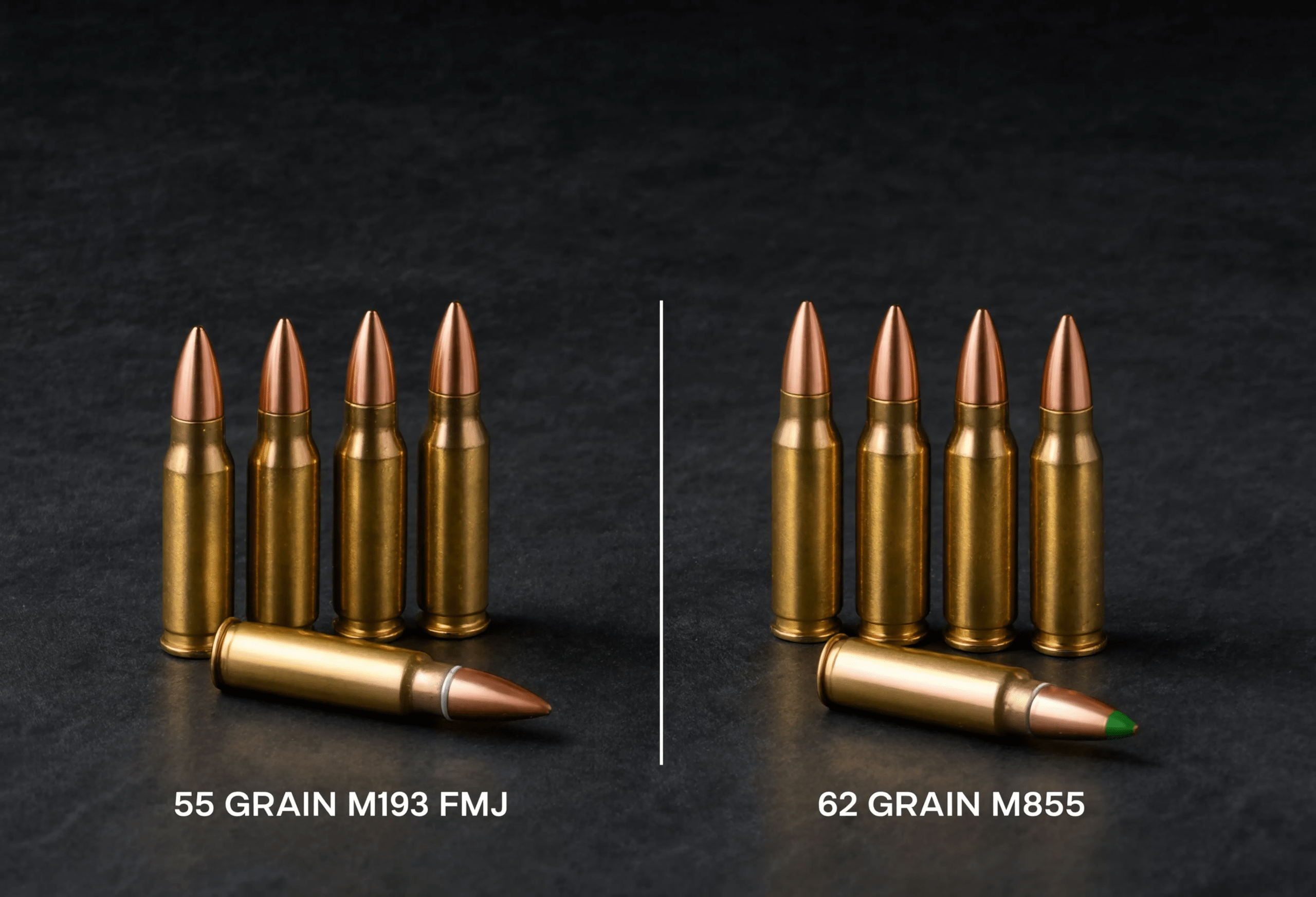
M193 usually refers to a 55 grain FMJ load. It is popular for AR-15 range training because it is widely available, often affordable, and accepted at more ranges than green tip ammunition.
M855 usually refers to a 62 grain green tip load. It uses a different projectile design and may include a steel penetrator component. Because of that, many indoor ranges and some steel target ranges restrict it.
For most general range use, M193-style 55 grain FMJ is often the easier starting point. For buyers specifically looking at green tip, range rules should be checked before buying in bulk.
Best 5.56 Ammo for Defense
5.56 defense ammo should be chosen carefully. Defensive rifle loads usually cost more because they use specialized bullet construction and are built for more consistent terminal performance.
When comparing defensive 5.56 ammo, focus on reliable cycling, accuracy in your rifle, trusted manufacturer reputation, and performance from your barrel length.
Do not rely on a defensive load without testing it in your AR-15. A practical ammo plan uses FMJ for training and a separate purpose-built load for serious defensive use where lawful.
Best 5.56 Ammo for Hunting
5.56 hunting ammo should use an expanding bullet. FMJ is generally not the right choice for hunting.
Hunters often choose soft point, hollow point, or polymer-tip projectiles because they are designed for better energy transfer. These loads may be used for varmint hunting, predator control, and some small to medium game where legal.
Always check local hunting regulations before using 5.56 NATO in the field. Rules can vary by state, game type, bullet design, and minimum caliber requirements.
5.56 NATO vs .223 Remington
Many buyers compare 5.56 NATO and .223 Remington because the cartridges look similar and are often used in AR-15 platforms.
A rifle marked 5.56 NATO can usually fire both 5.56 NATO and .223 Remington. A rifle marked .223 Wylde is commonly designed to handle both while supporting good accuracy. A rifle marked only .223 Remington should follow the firearm manufacturer’s guidance before using 5.56 NATO ammunition.
This matters because 5.56 NATO is commonly loaded to different pressure standards than .223 Remington. Before ordering a large case, check your barrel marking and compare the correct category, such as .223 / 5.56 NATO Ammo or 223 Remington Ammo.
PMC 5.56 Ammo
PMC 5.56 ammo is a common choice for buyers who want practical AR-15 range ammunition at a competitive price. PMC FMJ loads are often used for target practice, training, and bulk range sessions.
The main appeal is value. Shooters can train more often without paying premium defensive or hunting ammo prices.
If you are buying PMC 5.56 ammo in bulk, test a smaller quantity first when possible. Then move into larger case quantities once you know your rifle likes the load.
Federal 5.56 Ammo
Federal 5.56 ammo is another popular option for AR-15 shooters. Federal and American Eagle loads are often chosen for range use because they balance brand trust, availability, and practical performance.
Federal 5.56 and .223 loads can be useful for training, target shooting, and bulk buying. Product-level options may include FMJ, boat-tail FMJ, and other rifle loads depending on inventory.
You can compare related rifle ammunition in our Bulk .223 / 5.56 AR-15 Ammo category.
Winchester 5.56 Ammo
Winchester 5.56 ammo is widely recognized and often compared with Federal, PMC, and other AR-15 training brands. Many buyers choose Winchester FMJ loads for target shooting and range practice.
The best option depends on your rifle, price per round, bullet type, and how the load groups during range use.
For most AR-15 buyers, reliability and consistency matter more than brand name alone.
5.56 Ammo Price Considerations
5.56 ammo price changes based on brand, bullet type, case material, packaging, and market supply. FMJ training ammo is usually more affordable than defensive, hunting, or match-grade rifle ammo.
When buying bulk 5.56 ammo, compare cost per round instead of box price alone. A 1000-round case may cost more upfront, but it can offer better long-term value for regular range users.
Also check shipping cost, case quantity, bullet weight, and whether the ammo is boxed or loose packed.
Buyer Checklist Before Ordering 5.56 Ammo
Use this checklist before buying:
- Is your rifle marked 5.56 NATO, .223 Remington, or .223 Wylde?
- Are you buying for training, defense, hunting, or bulk range use?
- Is the bullet type right for the job?
- Is green tip ammo allowed at your range?
- Have you matched bullet weight to your rifle’s barrel twist?
- Have you compared cost per round?
- Have you checked local laws and shipping restrictions?
- Have you tested the load in your rifle before buying a large case?
This checklist helps buyers avoid poor ammo choices and wasted money.
Safety and Legal Notes
Always confirm rifle and ammunition compatibility before shooting. Follow the firearm manufacturer’s guidance and check your barrel markings before using 5.56 NATO or .223 Remington ammunition.
Check range rules before using green tip ammunition. Store ammo in a cool, dry place. Firearm, ammunition, hunting, and shipping laws vary by location.
FAQ
What is the best 5.56 ammo for AR-15 training?
For training, 55 grain FMJ or 62 grain FMJ is usually the most practical choice. These loads are widely available, often affordable, and useful for high-volume range practice.
Is bulk 5.56 ammo worth buying?
Yes, bulk 5.56 ammo can be worth buying if you shoot often. Larger case quantities can lower cost per round and help keep your practice ammo consistent.
What is green tip 5.56 ammo?
Green tip 5.56 ammo usually refers to M855-style 62 grain ammunition. Some ranges restrict it, so check local range rules before ordering.
What is the difference between M193 and M855 ammo?
M193 usually refers to a 55 grain FMJ-style 5.56 load, while M855 usually refers to a 62 grain green tip-style load. M855 may face more range restrictions because of its projectile design.
What barrel twist is best for 5.56 ammo?
It depends on bullet weight. Many 1:9 twist barrels work well with 55 grain and many 62 grain loads. A 1:8 twist is versatile, while 1:7 twist barrels are often used with heavier 69–77 grain bullets.
Is 5.56 good for hunting?
5.56 can be used for hunting in some areas where legal, but hunters should use expanding bullets and confirm local regulations before going into the field.
Can I shoot .223 ammo in a 5.56 rifle?
Many 5.56 NATO rifles can safely fire .223 Remington ammunition. Always verify your firearm’s markings and manufacturer guidance first.
Can I shoot 5.56 ammo in a .223 rifle?
Do not assume this is safe. Rifles marked only .223 Remington should use .223 Remington ammunition unless the manufacturer clearly approves 5.56 NATO.
Final Thoughts
The best 5.56 ammo depends on the job. Use FMJ for range training, bulk 5.56 ammo for regular practice, purpose-built loads for defense, and expanding bullets for hunting where legal.
For most AR-15 owners, the smartest setup is simple: keep affordable range ammo for practice, then choose specialized 5.56 loads only when the situation requires them.
To compare current options, browse our Bulk .223 / 5.56 AR-15 Ammo category.Ammo page.